FocalNomad participates in affiliate partnerships and may earn a commission on qualifying purchases at no additional cost to you. How FocalNomad earns affiliate commissions
There is an undeniable allure to pulling a movie theater out of a coat pocket. The promise of modern Digital Light Processing (DLP) technology—which uses microscopic mirrors tilted on a semiconductor chip—has shrunk optical engines down to sizes once reserved for deck-of-cards accessories.
However, when shopping for a pocket projector, optical physics often clashes with aggressive marketing claims. Between bold labels touting "4K Support" on palm-sized hardware and optimistic battery estimates, buyers need to separate what is genuinely feasible from marketing wishful thinking.
- "4K Support" vs. Native Resolution: In ultra-compact DLP units, "4K" almost always means the processor can accept and decode a 4K input signal, which it then downscales to a native resolution—typically 480p (WVGA) up to 720p or entry 1080p.
- Lumen Realities: A tiny LED engine powered by an internal battery produces modest brightness. Expect these to shine in pitch-dark bedrooms, hotel rooms, or tents, but not against bright daytime glare.
- Battery Thresholds: Internal batteries generally support between 1 to 2 hours of playback. Keep a USB power bank or wall adapter handy for extended movie sessions.
Spotlight: Standout Pocket DLP Models
Below are four notable pocket DLP options designed for varying trade-offs between physical size, software ecosystem, and autonomous battery playback.
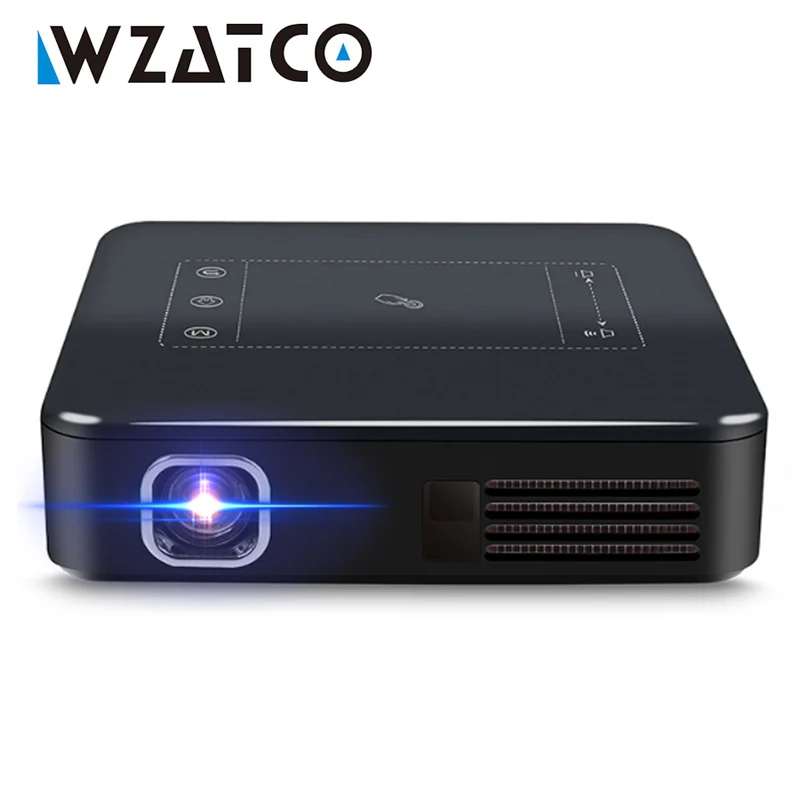
1. WZATCO D13 Smart Pico Projector
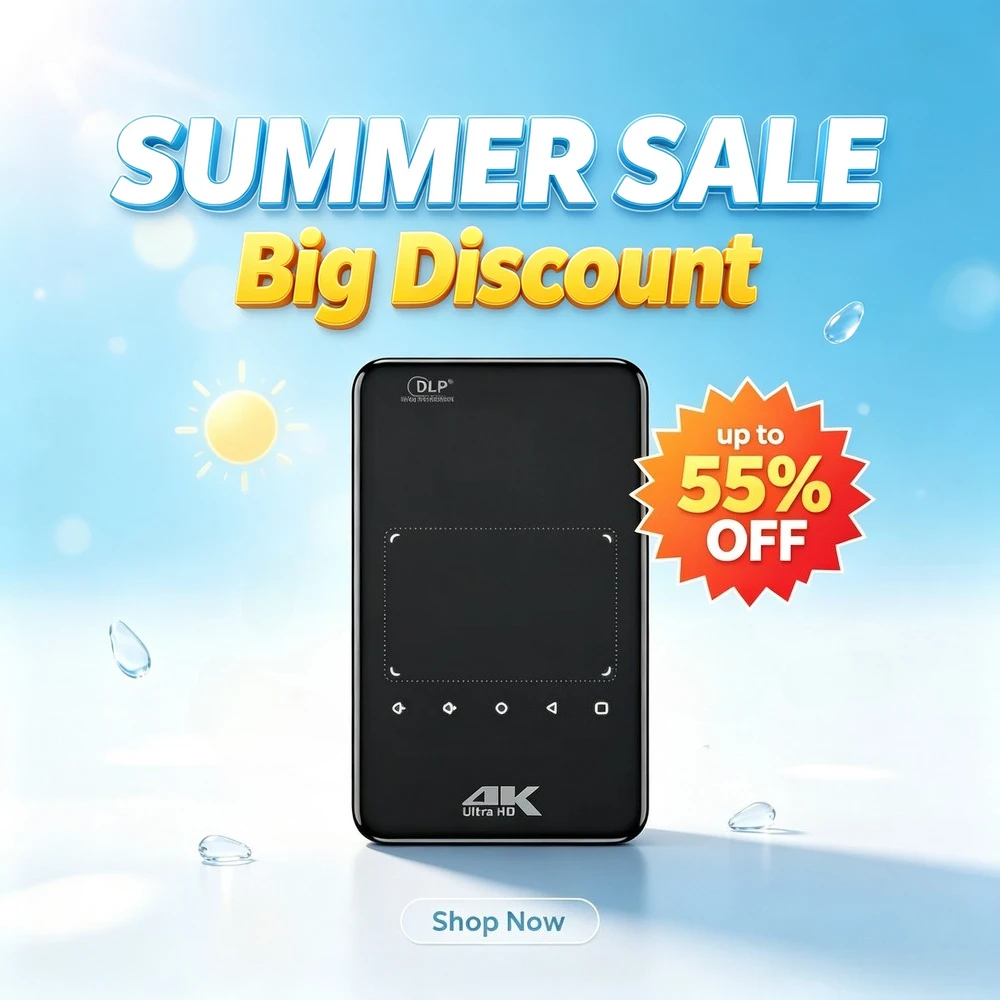
The WZATCO D13 balances a classic flat deck profile with smart Android capabilities and an integrated battery. Its chassis features integrated touch controls on the top panel, allowing menu navigation without immediately needing to find the remote control. Designed for standalone operation, it handles media streaming directly via Wi-Fi or connected external flash drives.
2. 8849 MARS Mini DLP Projector
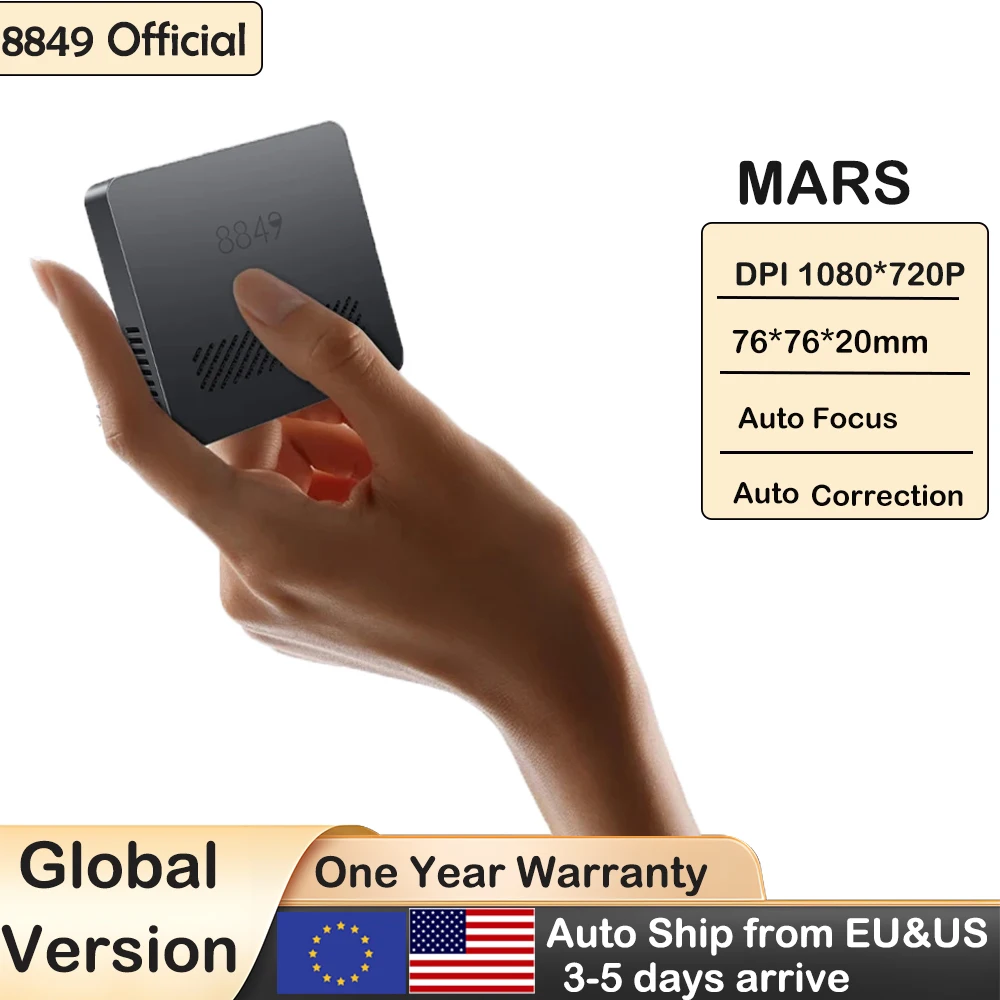
For those prioritizing pure minimalism, the 8849 MARS focuses on an ultra-compact square footprint measuring just 76×76×20 mm. The listing indicates a 1080×720p resolution tier paired with automated autofocus and keystone correction. Its diminutive palm-sized form factor makes it particularly attractive for travelers, mobile workers, and ultralight backpackers connecting directly to smartphones or laptops.
3. Vivicine Upgraded Android 13 HD Mini DLP
The Vivicine Upgraded Android 13 model emphasizes software modernism, running a contemporary Android build over dual-band 5G Wi-Fi and Bluetooth. Shaped like an oversized smartphone, it slips naturally into a jacket pocket and provides a familiar navigational paradigm for accessing streaming services and wireless mirroring.

4. VIVICINE P11 3D Pocket Projector
The VIVICINE P11 features a rounded squircle enclosure with a distinctive radial touch wheel on top. Beyond its built-in battery—rated around 1.5 hours of standalone projection—it includes reverse power bank functionality and hardware support for active 3D DLP-Link playback, giving it a distinctive multimedia toolkit for its compact size.
Key Factors When Choosing a Pocket DLP Unit
| Feature Focus | What to Look For | Practical Trade-Off |
|---|---|---|
| Optical Engine | DLP micro-mirror array with sealed LED light source | Sharper pixel grid than budget LCD, but lower maximum lumen output in small sizes. |
| Operating System | Onboard Android OS with Wi-Fi & Bluetooth | Standalone app streaming convenience, though older Android versions may limit DRM resolution on certain apps. |
| Auto-Alignment | Auto-focus and auto-vertical keystone | Speeds up setup in hotel rooms; heavy digital keystone correction can slightly soften corner details. |
Making the Right Pick
If sheer pocketability is your priority, sub-100mm designs like the 8849 MARS minimize gear weight. If your goal is an all-in-one entertainment hub for bedside ceiling projection or weekend trips where you want self-contained navigation, touch-panel models like the WZATCO D13 or VIVICINE P11 provide direct control without juggling extra accessories.