FocalNomad participates in affiliate partnerships and may earn a commission on qualifying purchases at no additional cost to you. How FocalNomad earns affiliate commissions
Every mini projector sells the same seductive architectural fantasy: slip a black rectangle into your jacket, walk into an empty room, and instantly conjure a cinema-grade canvas on bare drywall. The reality, however, is ruled entirely by thermodynamics and optics. A beam of light competing against daylight requires wattage; wattage creates heat; heat demands large copper heatsinks and noisy fans. When you shrink that entire apparatus to the size of a paperback or an espresso cup, optical compromises become inevitable.
Understanding those trade-offs is the difference between buying a delightfully versatile bedroom screen and ending up with an underpowered, frustrating paperweight. Today's market is largely split into two practical tiers: sub-$60 entry-level single-LCD beamers intended for pitch-black bedrooms, and $250 to $300 DLP (Digital Light Processing) units equipped with internal batteries, sealed optical engines, and pocket-friendly proportions.
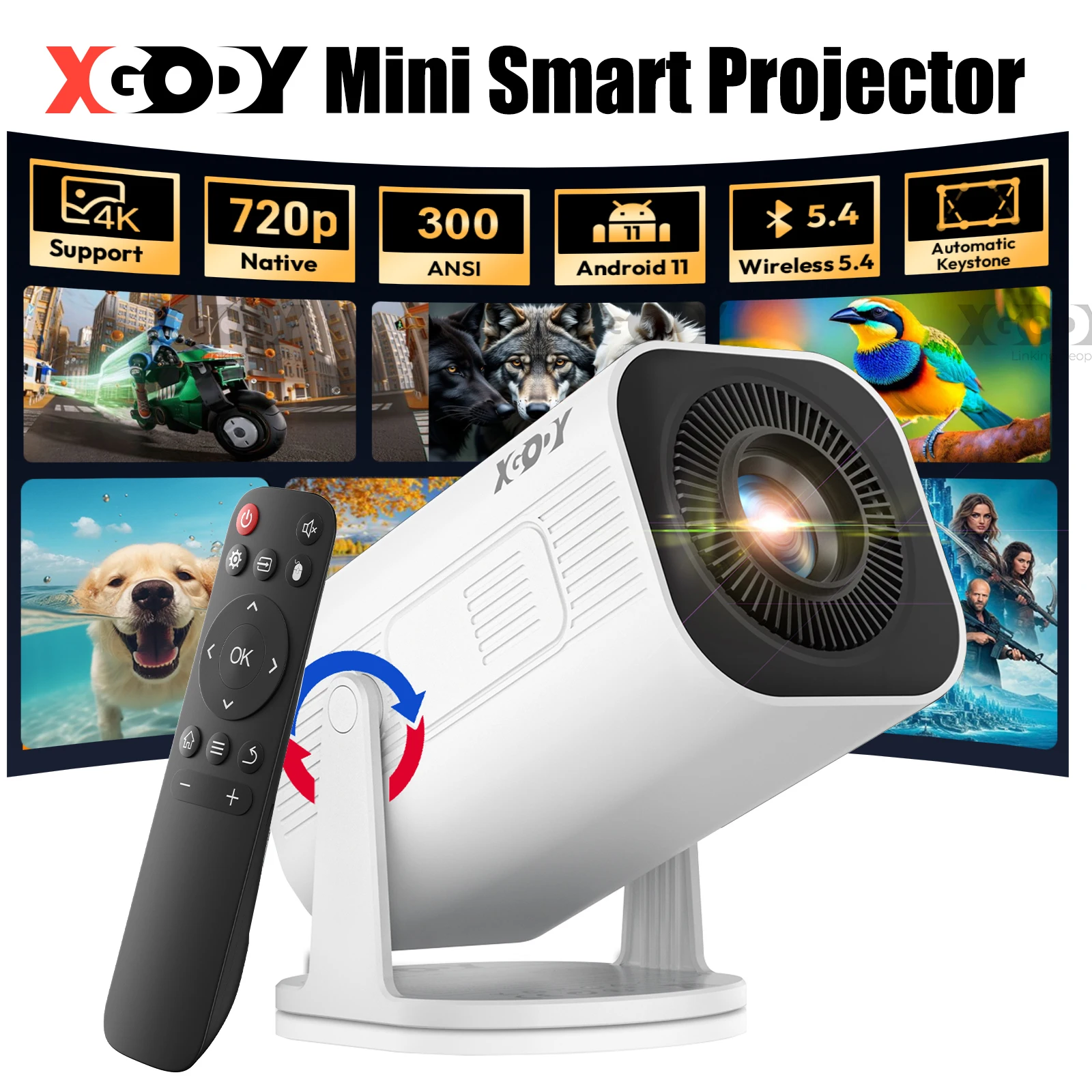
When a compact projector lists "4K Support" at an entry-level price point, it almost always refers to input decoding—meaning it can accept a 4K video stream from your phone or streaming stick without crashing. The actual glass and silicon inside project at a much lower native resolution, typically 720p or standard 1080p. Judge mini projectors by their native chip resolution, not their decoding capabilities.
The Sub-$60 Starter Class: Tethered Bedroom Screens
If you need an inexpensive display for a kid's bedroom, a temporary hotel wall, or casual ceiling viewing while lying flat on a mattress, sub-$60 beamers offer reasonable utility—provided you strictly control ambient light. These designs rely on single-panel LCD illumination, which produces wider chassis bodies and modest light output, but their low financial barrier makes them low-risk entry points.
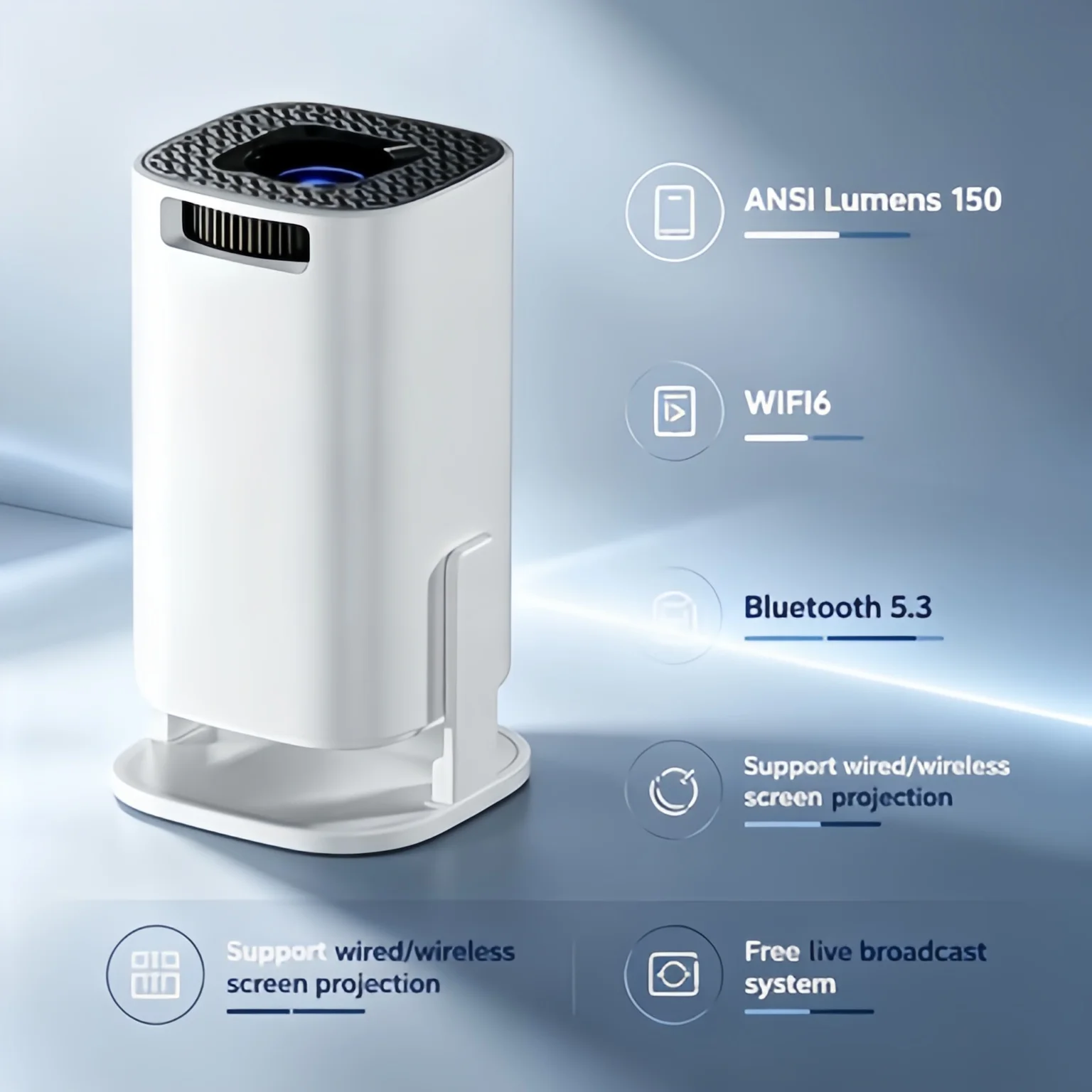
The 2026 Mini Projector adopts the popular swiveling column form factor. Its standout physical asset is the integrated cradle stand, which lets you tilt the lens vertically toward the ceiling without propping the unit on a stack of hardcover books. With an advertised 150 ANSI lumens and modern wireless conveniences—including Wi-Fi 6, Bluetooth 5.3, and direct smartphone casting—it serves cleanly as a casual nighttime streamer. Keep expectations calibrated: 150 ANSI lumens requires a genuinely dark room to preserve contrast, and wireless phone mirroring may occasionally hit copyright walls on DRM-protected streaming apps like Netflix or Disney+ unless paired with a dedicated HDMI streaming stick.
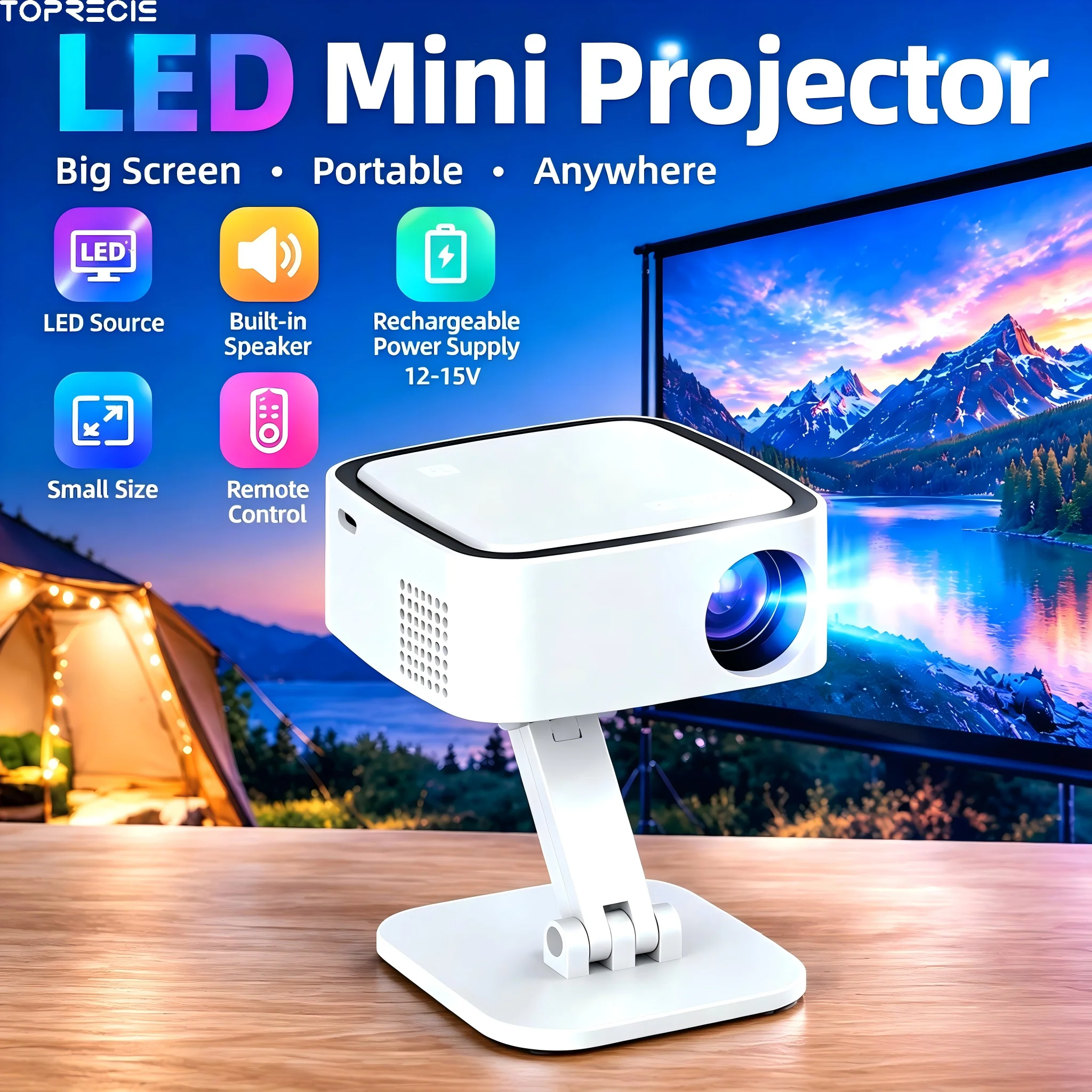
At a similar budget tier sits the Toprecis 720P Ultra Mini Projector. Built on a tiny articulated desk bracket, this unit targets desk setups and campsite tents. It advertises 720p native resolution and highlights modern Type-C power input (requiring a 12–15V capable supply). The inclusion of Type-C power input is functionally useful for travelers with high-wattage USB-PD bricks, sparing you from carrying a proprietary barrel adapter. It features standard HDMI and USB inputs alongside basic built-in speakers and an infrared remote. Like most sub-$60 single-panel units, focus uniformity may soften slightly around the outer corners of your screen, but it delivers an acceptable casual image in full darkness.
The $250 to $300 Class: Pocket DLP Engines and Untethered Mobility
Step up to the $250–$300 territory, and the technology inside shifts from bulky LCD panels to DLP micro-mirror arrays. DLP engines are sealed against dust, run cooler relative to their output, and allow for true pocket-sized flat forms or compact cylinders. Crucially, this tier introduces integrated lithium batteries, freeing you from wall outlets for casual presentations, garden screenings, or campervan trips.
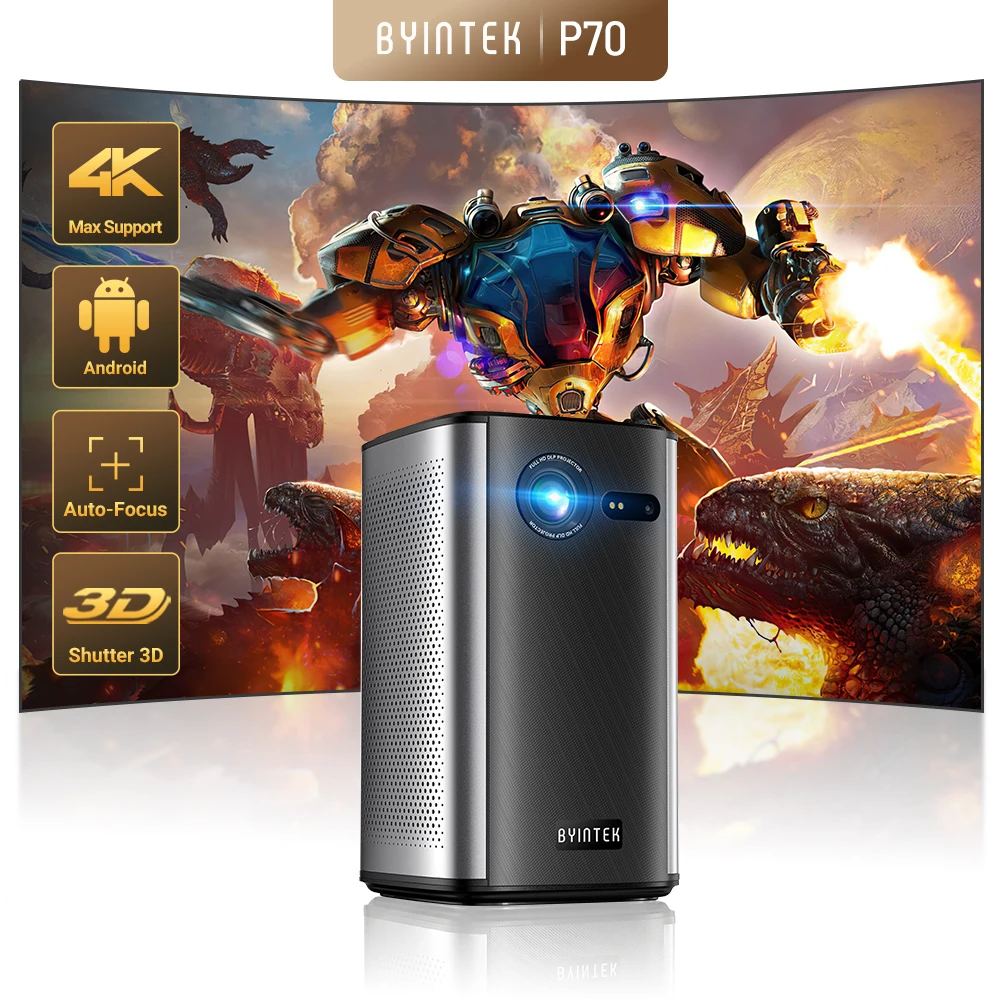
The BYINTEK P70 reflects the portable soda-can aesthetic, packing an integrated battery, smart Wi-Fi capabilities, and auto-focus sensors directly onto the front face. DLP technology gives the P70 snappier contrast and cleaner edge-to-edge sharpness than entry-level single-LCD competitors. While the listing notes 4K/1080p decoding alongside shutter 3D capability, its primary real-world advantage is mechanical convenience: set it down on a coffee table, let auto-focus pull the image sharp, and run a movie straight off the battery without wrestling cables.
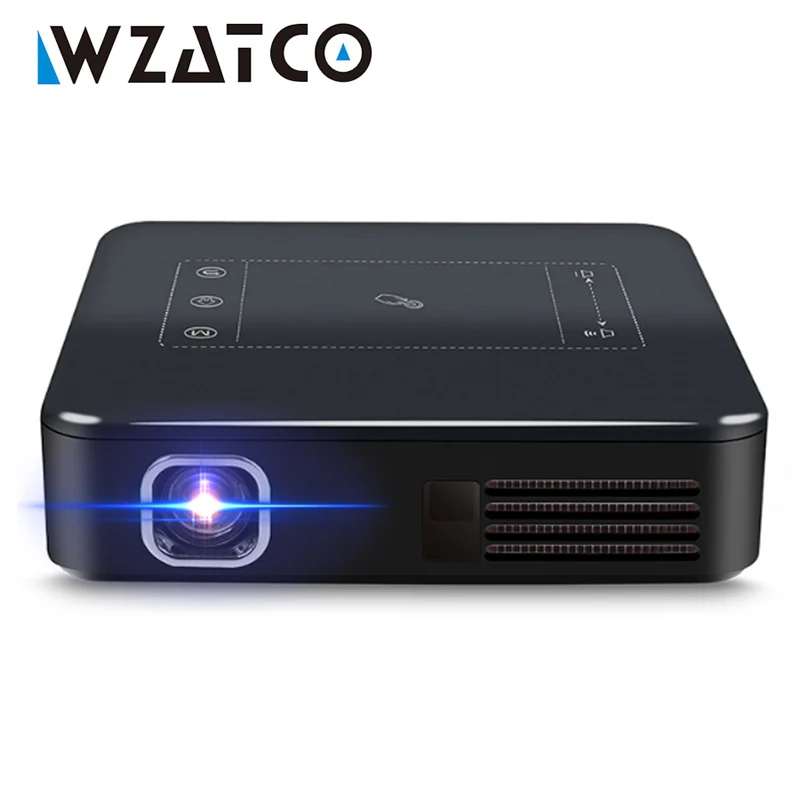
If height profile matters more than a vertical cylinder, the WZATCO D13 takes the flat pico slab route. Resembling a slim external drive with touch-sensitive navigation panels across the top deck, the D13 is engineered for flat storage inside laptop sleeves and backpacks. Running an integrated Android operating system with built-in Wi-Fi and battery reserves, it acts as an all-in-one media player. Because touch-capacitive controls are built onto the chassis, you can operate basic menus even if the physical remote gets left behind in an overnight bag.
Essential Decision Aids: Matching Hardware to Your Space
Throw Geometry & Screen Size
Mini projectors rarely feature optical zoom lenses. To make the image larger, you physically move the machine farther from the wall. In smaller bedrooms, an 8- to 10-foot throw distance naturally yields an 80-to-100-inch image. Remember the inverse-square law of light: doubling your picture size spreads the projector's lumens across four times the surface area, noticeably dimming brightness.
Acoustics & Ambient Noise
Miniature enclosures cannot house large acoustic chambers. While all four units feature built-in speakers, internal drivers generally sound like a modest smartphone speaker. To prevent high-speed cooling fan whir from overpowering dialogue, take advantage of onboard Bluetooth or 3.5mm audio jacks to pair an external portable speaker.
Which Class Should You Choose?
Your choice comes down to how and where you plan to watch:
- Choose budget LCD options ($40–$55) like the 2026 Mini Projector or Toprecis 720P if you want an inexpensive bedside novelty, already have wall power nearby, and intend to watch exclusively in dim or blackout conditions.
- Choose battery-backed DLP options ($270–$305) like the BYINTEK P70 or WZATCO D13 if you value flat-pack travel portability, cleaner optics, and the freedom to project on a porch, campsite, or client boardroom without untangling power cables.