FocalNomad participates in affiliate partnerships and may earn a commission on qualifying purchases at no additional cost to you. How FocalNomad earns affiliate commissions
The promise of a portable projector is romantic: point a tiny cylinder at a whitewashed bedroom wall, an exposed brick alcove, or a backyard sheet, and instant cinema appears. The market reality, however, is heavily congested with inflated marketing figures, confusing resolution claims, and mismatched optical expectations.
Making a portable projector work in your living space or campsite comes down to basic physics: light output measured under standard conditions, true native silicon resolution, and optical versatility. Here is how to navigate the current generation of compact beamers without falling for factory hyperbole.
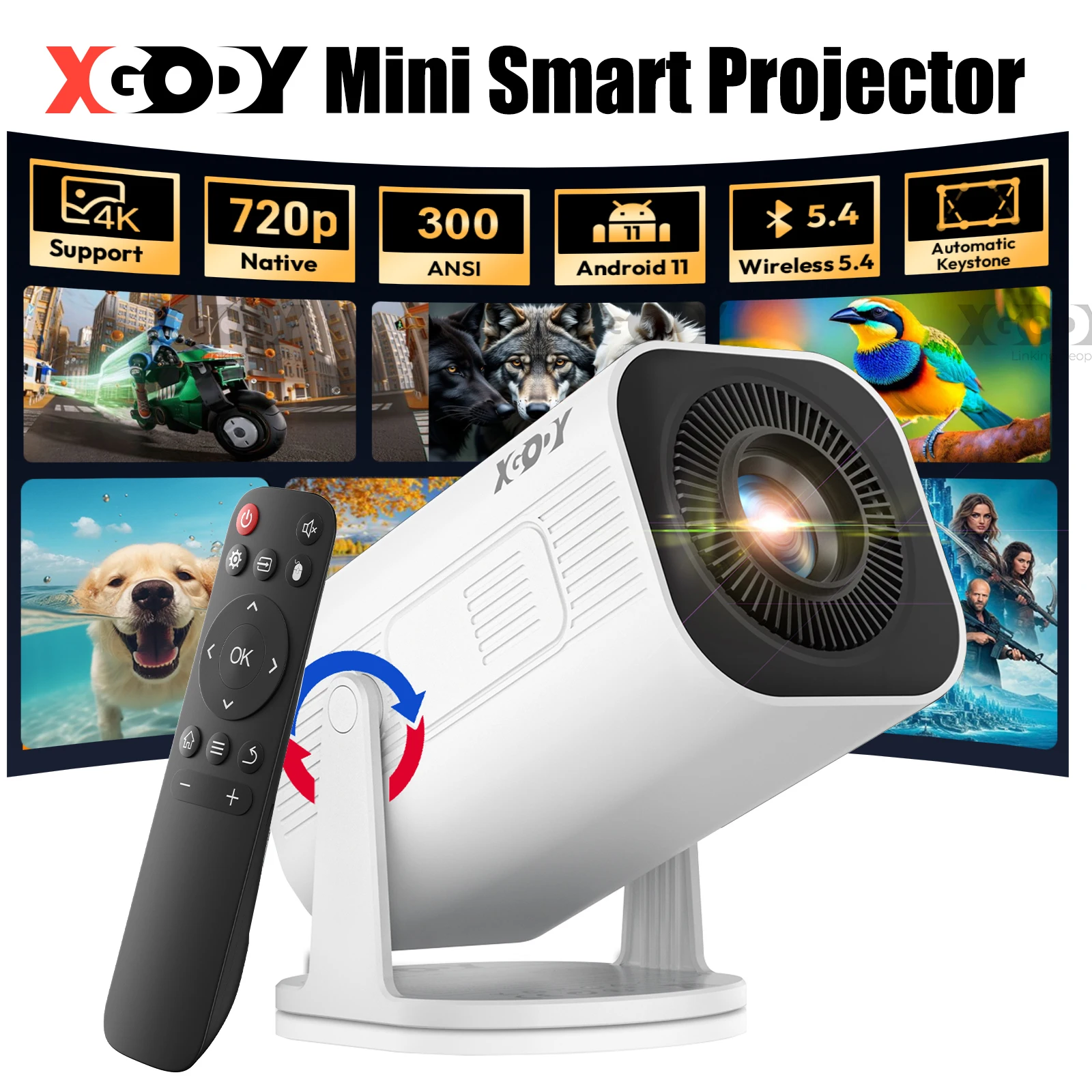
- "8K/4K Support" vs. Native Resolution: "Support" merely means the internal media processor can decode high-res video files down to the display panel's physical pixel grid (often 720p or 1080p). Native pixel count dictates true sharpness.
- Source Lumens vs. ANSI Lumens: Claims of "8,000 lumens" describe raw LED bulb output at the diode emitter, not usable light projected on your wall. Look for ANSI lumen figures to evaluate performance against ambient lighting.
- Gimbal Stands & Keystone: Rotating pivot stands allow rapid projection onto ceilings or angled surfaces, but extreme digital keystone correction discards pixels and softens peripheral focus.
High-Brightness Flagship for Larger Spaces
When projecting images larger than 80 inches or contending with residual dusk light in an outdoor setting, raw optical power becomes mandatory. Lower-powered compact units wash out quickly unless placed in complete, pitch-black darkness.

The Magcubic HY450MAX occupies the upper tier of compact domestic projectors. Listing a substantial 1,100 ANSI lumens alongside native 1080p output and automated focus mechanisms, it produces enough luminance to retain contrast across wider diagonal spreads. The integrated tilt mount avoids the awkward stack-of-books leveling routine, while Android 14 handles standalone media playback directly over dual-band Wi-Fi.
Everyday 1080p Compacts: Balanced Home Theater
For small apartments, dorm rooms, or bedroom ceilings, a balanced mid-tier unit providing native 1080p clarity strikes the best middle ground between price, size, and thermal fan noise.
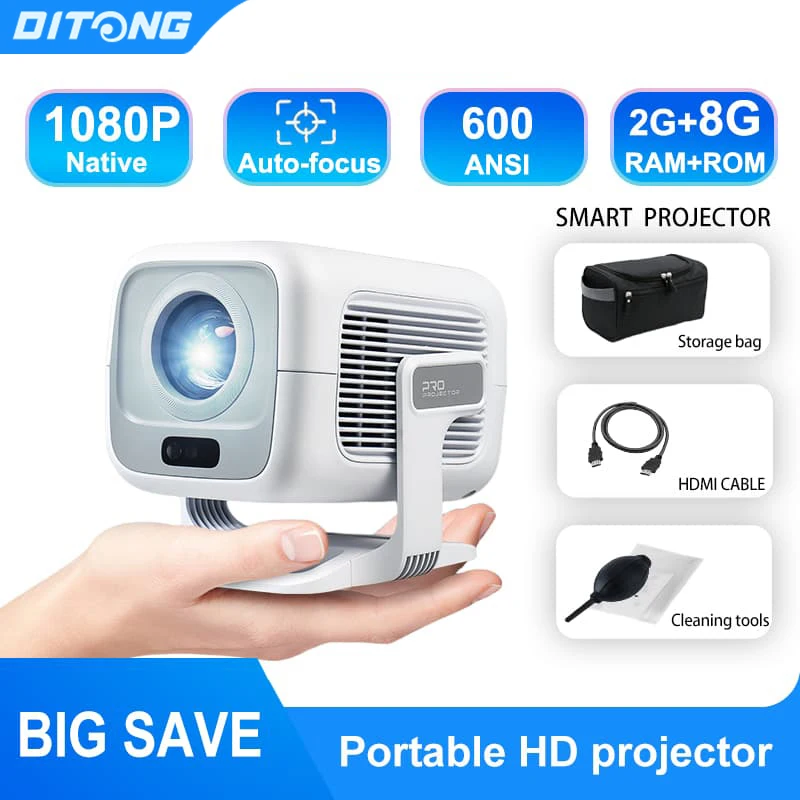
The DITONG X3Plus focuses on native Full HD projection with a claimed 600 ANSI lumen output, paired with 2GB of system RAM to keep its onboard Android interface responsive. Its boxy, industrial chassis includes automatic focus sensors and a low-slung cradle stand, making it straightforward to tuck onto a floating shelf or bedside table for evening streaming.
Ultra-Budget & Bedside Ceiling Projectors
Cylinder-style swivel projectors have gained immense popularity for a clear architectural reason: their integrated 180° to 270° rotating brackets project straight onto white ceilings, transforming bedroom viewing without requiring bulky wall mounts or tall tripods.
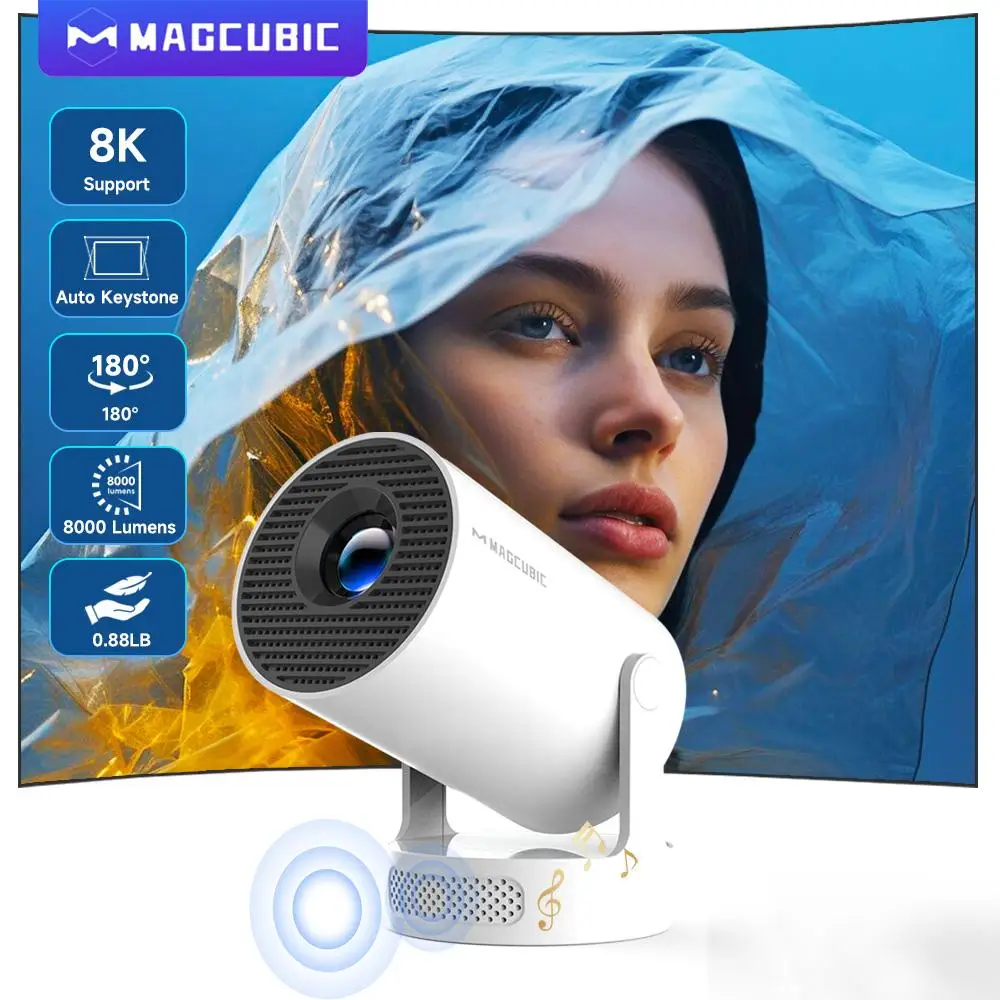
The Magcubic HY300 Pro+ uses a 1280×720p native LCD panel. While listings promote "8,000 lumens" (light source) and 8K signal decoding, in practical terms it serves as an affordable, lightweight bedroom beamer intended strictly for dark-room viewing onto nearby surfaces.

The Wimius L1 provides a 270° tilt chassis and 300 ANSI rating on Android 11. It excels as an ultra-portable travel unit where low weight and quick ceiling projection matter more than theater-grade black levels.
The Essential Companion: Controlling the Projection Surface
Even the sharpest optical engine is limited by the texture and reflectivity of the surface it hits. Matte painted drywall scatters light unevenly, while standard white walls often diffuse contrast into murky gray tones when ambient light bleeds into the room.
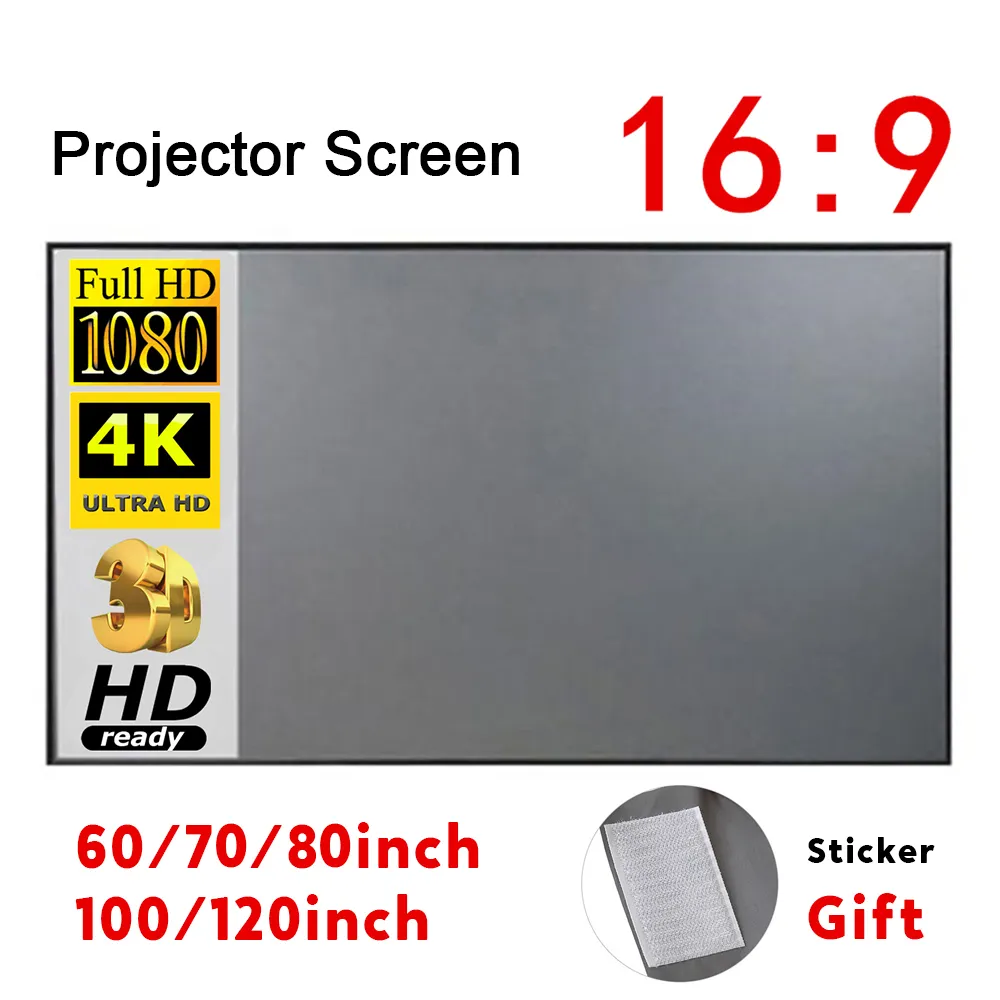
A dedicated Anti-Light Projection Screen uses specialized fabric layers to direct reflected beam paths back toward the viewer while rejecting off-axis ambient room lighting. For portable and outdoor setups, hanging an inexpensive tensioned screen between eyelets preserves black level depth and clean color saturation far better than bare siding or wrinkled bedsheets.
Quick Spec Comparison
| Model | Native Resolution | Brightness Benchmark | Stand Design | Best Application |
|---|---|---|---|---|
| Magcubic HY450MAX | 1080p Full HD | 1100 ANSI | Integrated Tilt Cradle | Living rooms & outdoor cinema |
| DITONG X3Plus | 1080p Full HD | 600 ANSI | Integrated Pivot Stand | Compact home theater & gaming |
| Wimius L1 | 1080p Supported | 300 ANSI | 270° Rotation Gimbal | Travel & casual ceiling viewing |
| Magcubic HY300 Pro+ | 720p HD | 8000 Light Source Lm | 180° Swivel Cylinder | Budget bedroom setups in dark rooms |
Practical Setup Advice
To extract the sharpest picture from any portable unit, position the projector physically perpendicular to your wall whenever possible. Relying on heavy digital keystone correction forces the internal scaler to squeeze image boundaries, discarding physical resolution and causing soft corners. Pair your unit with external Bluetooth audio or an auxiliary soundbar for full-range acoustics, and ensure air intake vents remain unobstructed during extended movie sessions.